In this article
- Table of Contents
- How can you eliminate the bottleneck between a customer call and your technician arriving on-site?
- Why Manual Scheduling is Costing You Jobs in Electrical Business Job Scheduling
- How Auto-Dispatching Works for South African Electricians
- Connecting Your Enquiry Intake to Technician Calendars
- The Bottom Line: Saving Time and Keeping Customers Happy
Table of Contents
- How can you eliminate the bottleneck between a customer call and your technician arriving on-site?
- Why Manual Scheduling is Costing You Jobs in Electrical Business Job Scheduling
- How Auto-Dispatching Works for South African Electricians
- Connecting Your Enquiry Intake to Technician Calendars
- The Bottom Line: Saving Time and Keeping Customers Happy
How can you eliminate the bottleneck between a customer call and your technician arriving on-site?
When a customer calls or emails about an urgent electrical fault, every minute you spend playing phone tag to find an available slot is a minute where you are not on-site earning revenue. For busy electrical business owners, the administrative friction of manual booking is a profit killer. Implementing efficient electrical business job scheduling software is not just about getting organized; it is about reclaiming the billable hours lost to back-and-forth coordination and scheduling errors. By moving away from fragmented spreadsheets and paper logs, you can transform your operations into a workflow that captures leads and mobilizes your team instantly.
In the following sections, we will explore why continuing with manual scheduling is actively costing you potential jobs and how auto-dispatching technology is changing the landscape for South African electricians. We will break down the process of directly connecting your enquiry intake to your technician calendars, ensuring that no lead falls through the cracks. Finally, we will look at the bottom line—demonstrating how automating your dispatch process saves time while boosting customer satisfaction and long-term retention.
Why Manual Scheduling is Costing You Jobs in Electrical Business Job Scheduling
For many South African electrical contractors, the workday is effectively split between high-value electrical installation work and low-value administrative firefighting. When your business relies on manual spreadsheets, paper diaries, or disjointed messaging apps to manage site visits, you are essentially imposing a tax on your growth. Every minute spent calling a technician to verify their location or emailing a client to confirm a slot is a minute you are not generating revenue.
The primary danger of manual systems is the response gap. When a customer has an electrical emergency, they rarely wait for a callback; they call until someone says yes. If your office workflow requires a human to manually check a calendar and call a technician back, your response time is likely measured in hours. In the competitive trade sector, this delay is the fastest way to lose a job to a business that prioritizes speed. Furthermore, manual entry is prone to human error, which results in wasted fuel, frustrated staff, and poor customer reviews. By digitizing your operation, you reclaim those lost hours and ensure your scheduling process is as professional as your technical craftsmanship.
How Auto-Dispatching Works for South African Electricians
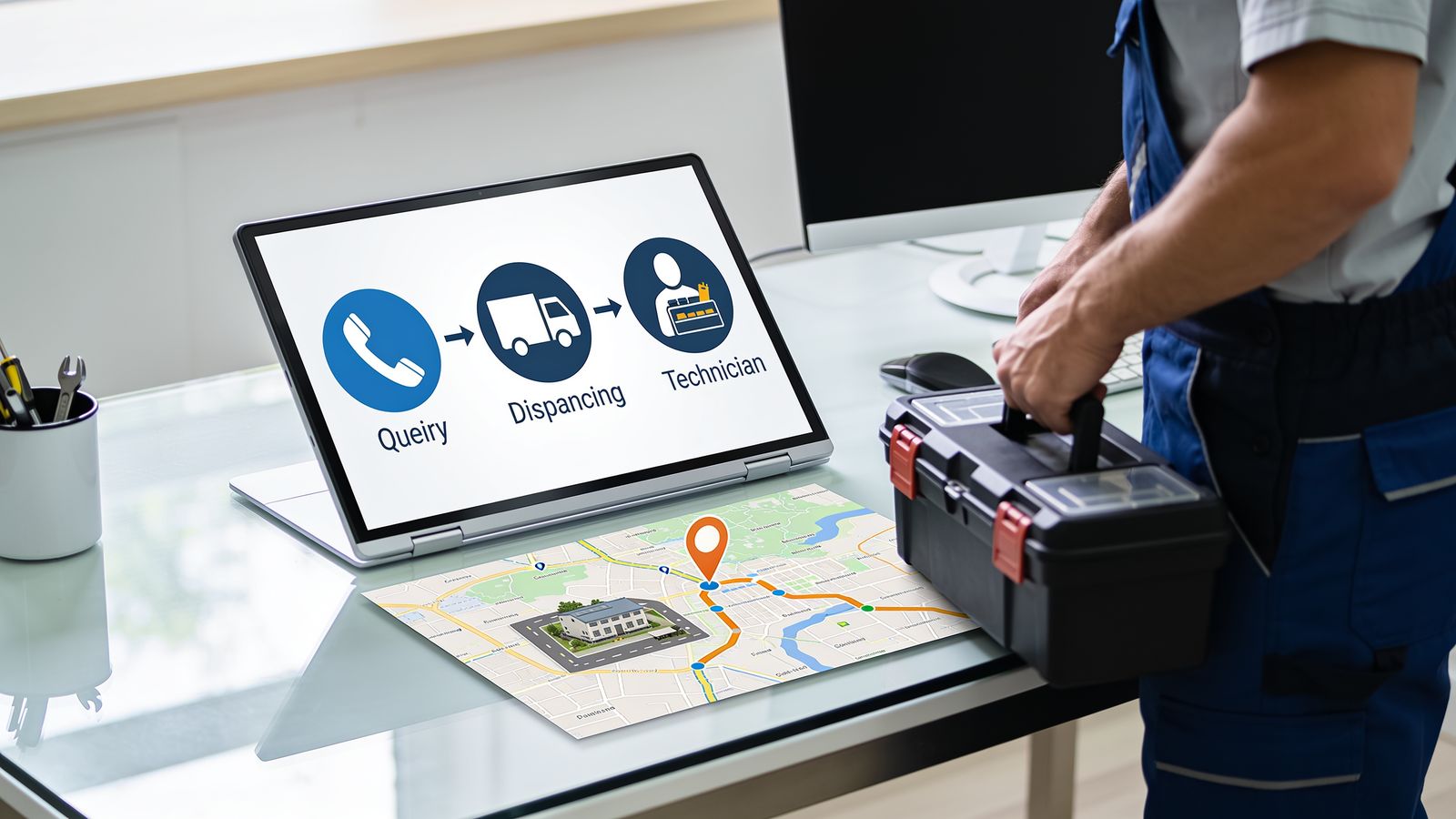
Auto-dispatching transforms your administrative process from a reactive chore into a proactive business asset. It functions by automating the logic behind your dispatch decisions, moving the job from enquiry to assigned without manual intervention. Automating routine scheduling and technician dispatching is one of the most effective ways for service-based businesses to reduce operational overhead while increasing the number of jobs completed per technician per week.
The workflow typically follows a structured, error-proof path:
- Lead Capture: An enquiry is submitted via a web form or mobile portal, instantly converting interest into data.
- Availability Matching: The software cross-references the job requirement with the technician’s live calendar, current GPS location, and skill set.
- Automatic Assignment: The system tentatively assigns the job to the most efficient candidate based on their proximity to the site.
- Technician Notification: The assigned electrician receives an instant alert on their mobile device containing site access details, job descriptions, and client contact info.
By removing the middleman phase of your office operations, you eliminate bottlenecks and ensure your team is utilized for their electrical expertise rather than administrative communication.
Connecting Your Enquiry Intake to Technician Calendars
The traditional pen-and-paper method of managing an electrical business is a major contributor to revenue leakage. When a lead comes in via a phone call or web form, the time taken to toggle between a paper diary, a messaging app, and a spreadsheet is time where your competitor is already securing the job. By integrating your enquiry intake directly with your technician calendars, you create a real-time ecosystem.
Modern field service management tools allow you to sync your enquiry forms directly into a dispatch board. Once connected, your enquiry intake acts as the trigger. When a customer inputs their location and issue, the software intelligently filters for the nearest available technician. This eliminates the need for you to act as the go-between. Instead, the technician receives a push notification on their mobile device containing the client's contact details, job site images, and specific requirements before they even arrive.
The Bottom Line: Saving Time and Keeping Customers Happy
The primary objective of automated dispatching is reclaiming your billable hours. Best-in-class field service companies that utilize automated scheduling and dispatching achieve significant improvements in technician productivity compared to their manual counterparts. For a South African electrical business, this translates to extra high-value jobs completed per technician, per week.
When you automate, you stop being an office clerk and start being a business owner. The reduction in dead time—that wasted period where a technician is waiting for confirmation or driving to a location that could have been optimized—adds up to monthly savings on fuel and labor costs. Furthermore, satisfied customers are the lifeblood of repeat business. Automated systems keep clients in the loop with SMS updates and technician tracking, which improves your professional image and customer retention rates.
If you are ready to remove the bottlenecks that keep you tethered to a desk rather than growing your business, book a free consultation to discuss how you can transition your electrical business to an automated dispatch model.