In this article
- Table of Contents
- From Inbox Chaos to Client Acquisition
- Why Manual Enquiry Management Costs Your Firm Money
- How Intake Automation Works for Accountants and Lawyers
- Qualifying Leads Without the Admin Burden
- Practical Steps to Route Enquiries Faster
Table of Contents
- From Inbox Chaos to Client Acquisition
- Why Manual Enquiry Management Costs Your Firm Money
- How Intake Automation Works for Accountants and Lawyers
- Qualifying Leads Without the Admin Burden
- Practical Steps to Route Enquiries Faster
From Inbox Chaos to Client Acquisition
For most professional firms in South Africa, a new enquiry email is just the start of an administrative headache. Instead of winning new business, your team spends hours manually sorting, replying, and qualifying prospects. Imagine if your intake system did that work for you before you even opened your inbox. By implementing professional services enquiry automation, you can stop treating lead management as a clerical task and start treating it as a revenue-generating asset. GrowthStart helps firms reclaim these lost hours by transforming fragmented email threads into a streamlined, high-conversion pipeline.
Manual enquiry handling is a silent drain on your firm’s profitability, often resulting in delayed response times and lost billable hours. In the following sections, we will examine why your current intake process is costing you money and how automation provides a scalable solution for accountants, lawyers, and consultants. We will explore how to set up intelligent routing systems to qualify leads without increasing your administrative burden and outline the practical steps you can take to move enquiries to the right desk faster. By shifting the focus from manual data entry to strategic client engagement, you position your firm to capture opportunities that competitors are missing.
Why Manual Enquiry Management Costs Your Firm Money
In professional services, your profitability is directly tied to the ratio of billable hours versus administrative overhead. When your enquiry intake remains a manual, inbox-heavy process, you are effectively paying senior staff members to act as glorified mailroom clerks. Every minute a lead sits in a generic inbox waiting to be read, categorized, and forwarded is a minute of lost potential revenue.
The financial drain of manual processes manifests in three distinct ways:
- Opportunity Cost: High-value partners are interrupted from complex client work to triage emails, reducing the total billable capacity of the firm.
- Lead Decay: As noted by n8n.io, speed of response is the primary predictor of conversion. Manual triage inherently delays response times, leading to prospects moving on to more responsive competitors.
- Operational Leakage: Manual data entry across multiple spreadsheets or disconnected systems leads to human error, missed follow-ups, and the loss of promising leads that fall through the cracks of a busy inbox.
Beyond the immediate loss of hours, manual management forces a reactive culture. Your firm stops being a strategic partner and starts being a traffic controller. When you consolidate your digital presence—starting with a reliable professional domain and hosting infrastructure—you create a stable foundation for the automated intake systems that allow you to capture, track, and close leads without manual intervention.
How Intake Automation Works for Accountants and Lawyers
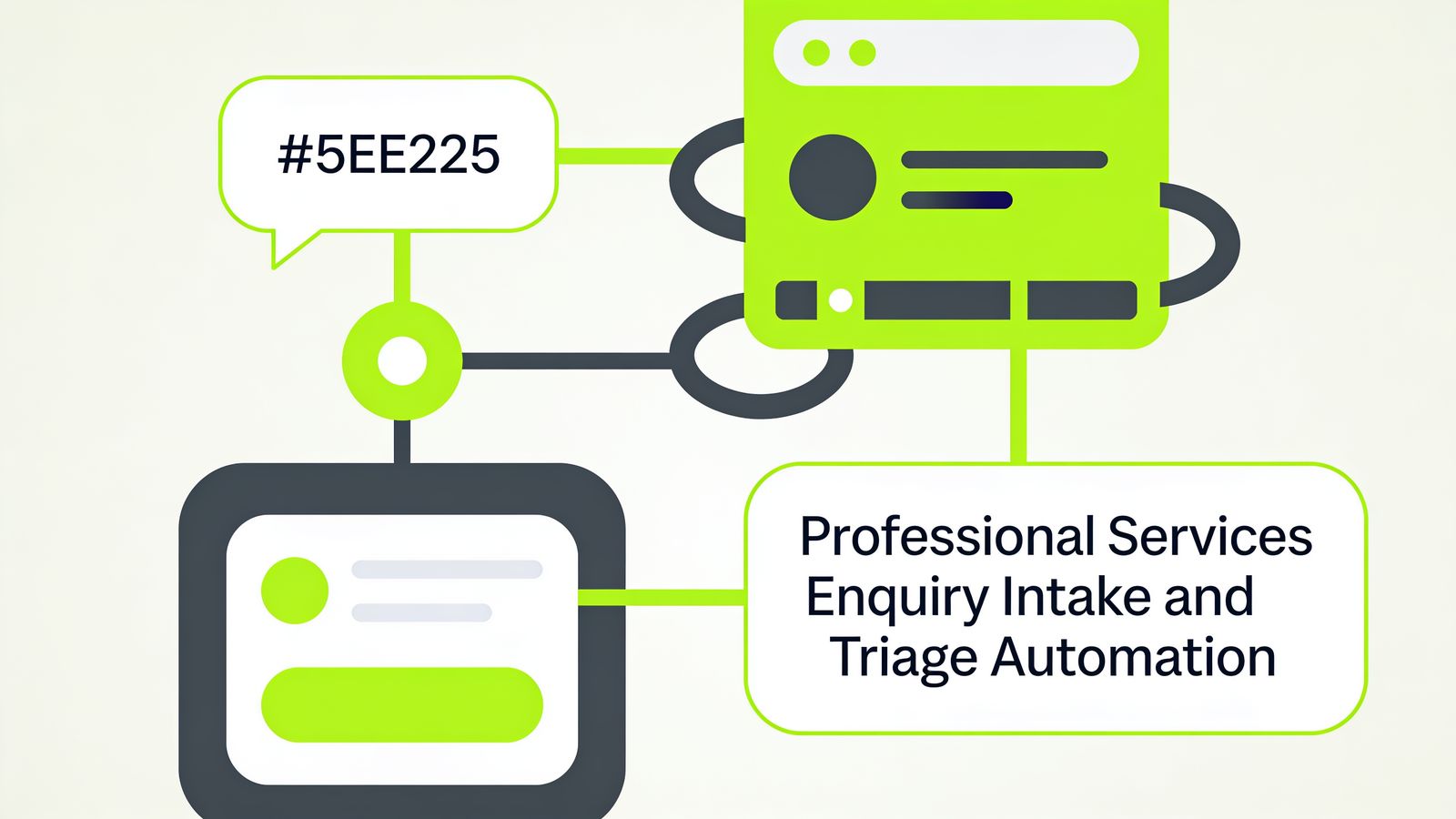
To reclaim your time, you must stop treating an enquiry as an email and start treating it as data. Automated intake replaces the generic contact form with a structured discovery workflow. This system forces the enquirer to provide the specific details your firm needs to determine if they are a viable prospect, effectively automating the first stage of your lead qualification workflow.
Instead of a broad message that requires a manual reply to ask for more details, a structured form immediately captures:
- Industry vertical or niche.
- Specific service requirements (e.g., forensic audit vs. tax planning).
- Budget expectations or project timeline.
- Current firm size or annual turnover.
Once this data is captured, your automation engine acts as an intelligent triage officer. It immediately tags the lead, generates a record in your CRM, and routes the information based on pre-defined logic. For example, complex litigation enquiries can be flagged for senior counsel, while routine compliance queries are funneled into a standardized onboarding sequence. This process ensures that your most expensive talent only interacts with leads that have been pre-qualified, effectively eliminating the admin burden that currently clogs your pipeline.
Qualifying Leads Without the Admin Burden
The true cost of manual lead qualification is not just the time spent reading emails; it is the opportunity cost of chasing low-value prospects while high-value ones drift away. In professional services, your expertise is your product. When your senior partners spend their day acting as human filters for generic enquiries, your firm’s billable capacity shrinks significantly. By implementing professional services enquiry automation, you shift the burden of qualification from your people to your systems.
By embedding logic-based questionnaires into your intake forms, you can instantly segment prospects based on firm size, budget, or service complexity. For example, a legal practice can require a potential client to identify their specific matter type—such as contract law versus litigation—before they can even submit a request. This ensures that when a lead finally hits your dashboard, they are already vetted for fit. Research from the Harvard Business Review supports the urgency of this approach, finding that firms that respond to potential leads within an hour are nearly seven times more likely to have meaningful conversations with key decision-makers than those who wait even an hour longer. Automation allows you to maintain that golden hour response window without requiring a staff member to be glued to their inbox, effectively turning your intake process into a 24/7 business development engine.
Practical Steps to Route Enquiries Faster
Once a lead is qualified, the final hurdle is getting that information into the hands of the right person without manual intervention. Too often, leads sit in a general mailbox, waiting for an office manager to manually triage them. This creates a bottleneck that slows down your response time and diminishes the client’s perception of your professionalism. To solve this, you need to transition from a manual email-forwarding culture to an automated routing system that triggers immediate action.
Using integration platforms to connect your website forms with your CRM or project management tools allows you to set automated rules based on the lead data. A tax consultancy can route complex audit enquiries directly to a partner’s calendar, while standard bookkeeping queries are automatically assigned to an account manager’s task list. This ensures that every enquiry is handled by the appropriate expert from the very first interaction. By removing the human middle-man, you eliminate the risk of lost emails and ensure that your team stays focused on billable output.
In summary, the transition from manual enquiry management to automated intake and triage is a necessity for firms aiming to scale efficiently. By implementing standardized workflows, you eliminate costly administrative bottlenecks, drastically reduce unproductive email cycles, and ensure that every high-value lead is instantly routed to the most appropriate specialist.
Book a free consultation and we'll map out what to automate first — no jargon, no obligation.